


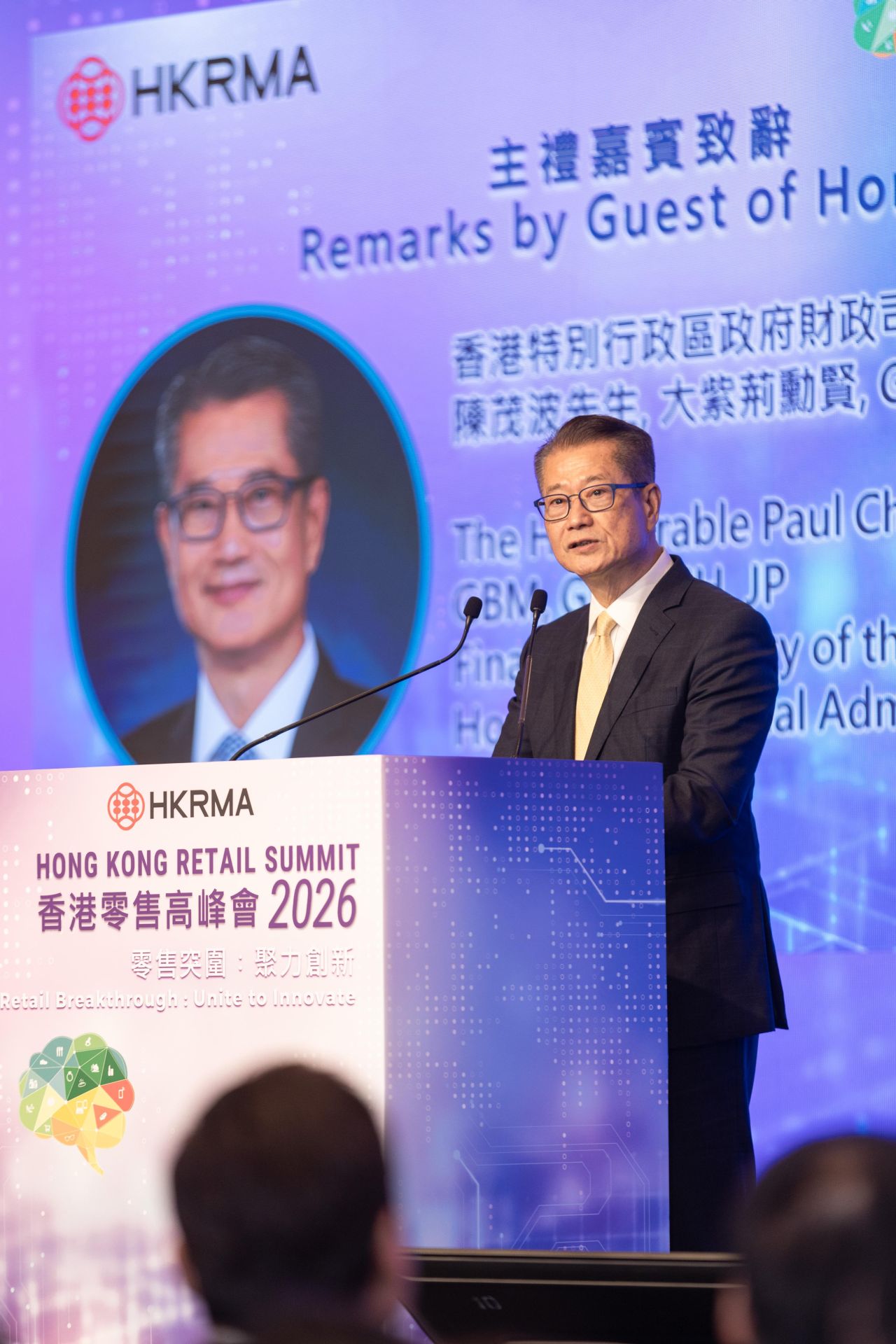
The Hong Kong Retail Summit 2026, organised by the Hong Kong Retail Management Association (HKRMA), was successfully held on 10 June 2026 under the theme “Retail Breakthrough: Unite to Innovate.” The Summit centred on three core pillars: Cross‑Sector Collaboration, IP‑Driven Marketing, and AI Implementation in Practice.
In the morning session titled “Seamless City: Co‑Creating a Mega‑Event Ecosystem,” speakers emphasised that the event economy is a key engine of retail growth, but the challenge lies in overcoming “weak conversion” — where massive event footfall does not fully translate into sustained consumption due to short dwell time and fragmented spending chains.
The Financial Secretary described Hong Kong’s retail landscape as being in a phase of rapid transformation with significant opportunities ahead. He noted that Hong Kong’s strengthened position as an international trade centre, together with the national “15th Five‑Year Plan” emphasis on high‑level opening‑up, will reinforce the city’s role as a “super‑connector” and “super value‑adder.”
From Footfall to Full Conversion
Industry representatives highlighted the importance of integrating “Event Flow – Retail Spending – Hotel Stay” into a seamless consumption chain. Upcoming mega sports events and World Cup‑related experiences were identified as major catalysts for upcoming spending demand. Sports tourism generates strong multiplier effects across hotels, retail, F&B, entertainment and transport, creating broad‑based economic benefits.
Speakers also noted that different event segments have distinct consumption patterns. For example:
- Local concerts often drive post‑event dining demand.
- International K‑POP concerts attract younger regional visitors with longer waiting times, presenting strong retail conversion opportunities.
To address practical pain points — such as inconvenience in bringing purchases into venues — smart lockers, cold storage, courier services and direct‑to‑hotel delivery solutions were introduced as effective enablers of spending.
Hospitality: From Accommodation to Personalised Experience
The Federation shared that visitors’ core expectations have shifted from simple accommodation to deep, personalised city experiences. Hotels are increasingly offering integrated “Stay + Event” packages, including collaborations with theme parks, concerts, football matches and major exhibitions.
The rise of “Bleisure” (Business + Leisure) travel was also highlighted, where business travellers extend stays with family members — effectively increasing length of stay and per‑capita spending. AI and data analytics are playing a growing role in personalising guest journeys, curating tailored event recommendations, and enhancing cross‑sector engagement.
Strengthening Long‑Term Coordination
Panelists proposed establishing a standing cross‑industry communication platform to ensure timely information sharing upon confirmation of major events, enabling coordinated marketing and city‑wide thematic activations. Drawing reference from international best practices, a unified city dressing and branding strategy during mega events would further strengthen Hong Kong’s “Events Capital” positioning.
As Hong Kong continues to develop its mega‑event strategy, building a seamless “Event – Culture & Tourism – Retail – Hotel” ecosystem will be key to transforming visitor flow into sustained economic value.
The Federation will continue to collaborate proactively with industry partners to create new growth momentum for our member hotels.